
Industrial IoT Monitoring Solutions for Real Operational Environments
Senzemo helps organizations monitor temperature, humidity, air quality,
soil moisture, rainfall, leaf wetness, and other critical conditions using
low-power LoRaWAN sensors designed for reliable long-term operation.
From food safety and cold chain to museums, healthcare, agriculture,
composting, and urban climate projects, our solutions are built to turn
environmental data into practical decisions.
Whether you need a single sensor type, a full monitoring package, or a
custom hardware solution tailored to your deployment, Senzemo supports
projects from pilot phase to scaled rollout.
What this page covers
This page brings together the most relevant use cases behind the Senzemo
sensor portfolio. Instead of presenting each sensor as an isolated device,
it shows how products fit into real monitoring workflows across multiple
industries.
- Food safety, HACCP, cook-chill, and cold chain monitoring
- Retail refrigeration and distributed compliance monitoring
- Museum, archive, and sensitive-building preservation
- Healthcare and medicine storage monitoring
- Urban climate and smart city microclimate networks
- Orchards, vineyards, irrigation, and disease-risk monitoring
- Compost, mulch, grain, and bulk temperature monitoring
Why organizations choose Senzemo
- LoRaWAN-based monitoring for low power consumption and long range
- Multi-year battery operation for low-maintenance deployments
- Products built for harsh and operationally demanding environments
- Compatibility with different LoRaWAN platforms and dashboards
- Options for pilot deployments, standardized rollouts, and custom hardware
- Made and assembled in the European Union
The result is a monitoring stack that is easier to deploy than wired
alternatives, more scalable than manual checking, and more operationally
useful than disconnected stand-alone data loggers.
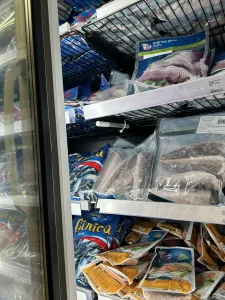
Food Safety, HACCP & Cold Chain Monitoring
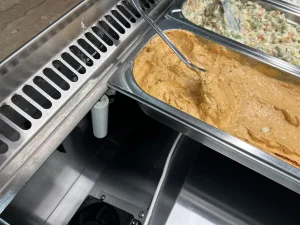
records, and fast response when something drifts out of range. In kitchens,
hotels, retail environments, production areas, storage rooms, and cold
transport chains, manual checks are often slow, inconsistent, and difficult
to standardize across teams and locations.Senzemo food safety solutions are designed to replace periodic
paper-based routines with continuous digital monitoring. Instead of waiting
for the next check round, teams can see conditions in real time, get alerts
when thresholds are exceeded, and maintain a clear digital audit trail for
internal quality systems and external compliance requirements.
Typical challenges
- Manual temperature checks consume staff time every day
- Human error creates gaps in logs and inconsistent reporting
- Ambient-only readings can create false alarms in dynamic environments
- Door openings and airflow changes make temperature interpretation difficult
- Distributed sites are difficult to standardize and supervise
- Spoilage, waste, and compliance risk increase when issues are discovered late
How Senzemo solves it
Senzemo combines multiple sensor types to match the real conditions of
food operations. For straightforward cold-room or fridge logging, a
temperature-only sensor provides efficient coverage. For areas where
humidity context matters, a microclimate sensor adds environmental detail.
For freezer monitoring and installations where the sensing point must be
separated from the radio node, a temperature probe sensor is a better fit.
For food-simulant workflows and HACCP decisions that should reflect the
thermal inertia of real products rather than surrounding air alone, the
temperature buffer sensor provides both buffered and ambient readings in
one device.
Best-fit environments
- Hotels and professional kitchens
- Cook-chill operations
- Retail chains and supermarket refrigeration
- Food production and storage sites
- Cold rooms, freezers, display vitrines, deli areas, and back-of-store fridges
- Transport and other cold-chain checkpoints
Relevant products
- STO10 — temperature-only sensor for broad cold-chain and HACCP coverage
- STB10 — buffered + ambient temperature for food-simulant style monitoring
- STP40 — temperature probe for freezers and hard-to-place measurement points
- SMC30 — temperature + humidity for added environmental context
- STF40 — food probe sensor for cook-chill and process temperature checks
Case themes behind this section
In retail food compliance deployments, Senzemo combines temperature-only,
temperature-probe, and temperature-humidity sensors across refrigerators,
freezers, deli counters, vitrines, and back-of-store storage areas. In
digital food compliance projects, the product mix is explicitly positioned
around reducing false alarms, replacing paperwork, and creating
traceable, audit-ready records. In cook-chill applications, the monitoring
workflow focuses on continuous time/temperature verification rather than
one-off checks.
Business outcomes this type of setup supports
- Less time spent on repetitive manual checks
- Lower risk of spoilage and stock loss
- Fewer missed excursions and delayed interventions
- Cleaner records for audits and internal reviews
- Standardized monitoring across multiple locations
- More confidence in compliance and corrective actions

Retail Food Compliance at Scale
Retail environments are especially demanding because monitoring has to
work in both front-of-store and back-of-store conditions. Open and closed
cabinets, freezers, cold vitrines, deli counters, and display units can all
behave differently depending on traffic, loading, service routines, and
ambient conditions.
A scalable retail solution needs to support many endpoints, reliable indoor
radio performance, clean reporting, and low operational overhead. That is
why Senzemo’s retail monitoring approach uses LoRaWAN, dense sensor
placement where temperature drift actually occurs, and a practical mix of
sensor types rather than a one-device-fits-all model.
Recommended retail sensor mix
- SMC30 for temperature and humidity in deli zones and positive-temperature fridges
- STP40 for negative-temperature and freezer points where probe placement matters
- STO10 where temperature-only logging is sufficient
- STB10 for product-representative temperature workflows and reduced false alarms
What this supports operationally
- Consistent store playbooks for rollout across many sites
- Faster alerting when temperature drift happens during busy trading hours
- Less dependence on handwritten logs and local routines
- Better visibility into refrigeration performance and recurring trouble spots
Museums, Archives, Historic Buildings & Indoor Preservation
Some buildings cannot be retrofitted with invasive infrastructure, yet still
require tight control of indoor climate conditions. Museums, archives,
palaces, and heritage buildings often need stable temperature and humidity
without drilling walls, running new cable routes, or disturbing sensitive
interiors.
In these environments, Senzemo provides low-impact monitoring using
battery-powered wireless sensors that can be distributed across exhibition
rooms, storage areas, corridors, and sensitive zones. The goal is not only to
gather data, but to make preservation work more proactive by identifying
problematic spaces, revealing environmental patterns, and supporting
better HVAC decision-making with minimal intervention in the building itself.
Relevant products
- SMC30 — indoor microclimate monitoring for temperature, humidity, and pressure
- SPU10 — indoor air quality monitoring with CO2 and TVOC
Good fit for
- Museums and heritage sites
- Archives and libraries
- Historic buildings with retrofit limitations
- Public buildings where comfort and preservation intersect
- Facilities that need discrete monitoring across many rooms
Why this matters
Preservation teams need more than occasional logger downloads. They need
continuous insight into temperature and humidity behavior over time,
including room-to-room differences, seasonal trends, and anomalies that
could affect artifacts, displays, or building materials. This is where a
connected microclimate network becomes more valuable than isolated
measurement points.
What the page should communicate
- Low-impact deployment for sensitive environments
- Reliable climate data without constant manual collection
- Support for preservation planning and energy efficiency
- Room-level visibility for buildings with complex environmental behavior

Healthcare, Vaccine & Medicine Storage Monitoring
Medicine and vaccine storage introduces a different risk profile. Here the
cost of a temperature excursion is not only financial; it can also affect
patient safety, trust, and operational continuity. Refrigeration units are often
opened many times throughout the day, making stable monitoring and timely
alerting essential.
Senzemo’s approach is well suited to these environments because it can
combine accurate temperature measurement, door/open-event context via
sensor behavior, centralized alerting, and low-maintenance deployments
across many fridges or storage points.
Relevant products
- SMC30 — indoor monitoring with temperature and humidity
- STP40 — probe-based temperature sensing where measurement placement matters
- STO10 — streamlined temperature logging where simplicity is preferred
Ideal applications
- Hospital refrigeration
- Medicine storage rooms
- Vaccination and pharmacy cooling points
- Healthcare facilities that require centralized alerting and traceability
Key benefits
- Better control of storage conditions
- Lower medicine disposal risk
- Reduced time spent on manual inspection rounds
- Clearer escalation when a unit behaves abnormally

Urban Climate, Smart Parks & Smart City Monitoring
Cities increasingly need hyperlocal environmental data to understand heat
exposure, thermal comfort, and conditions that vary by street, park, district,
or built environment. Traditional weather data is rarely granular enough to
reveal what citizens actually experience at ground level in public spaces.
Senzemo supports city-scale microclimate deployments using outdoor
LoRaWAN sensors that can be installed across parks, urban corridors,
neighborhoods, and public spaces. With the right network design, local
authorities can monitor current conditions, compare different zones, identify
hotspots, and make better decisions around greening, shading, cooling
strategies, and infrastructure planning.
Relevant products
- SMC30-OUT — outdoor microclimate sensor for temperature, humidity, and pressure
- SRM10 — rainfall monitoring for urban environmental insight
- SPU10 — indoor air quality where public buildings are part of the program
Use cases
- Urban heat monitoring
- Smart parks and green-space optimization
- Climate resilience and public-health initiatives
- Municipal dashboards and public-facing climate data
- Research and demonstration projects
Why this deployment model works
Smart city projects usually need many distributed measurement points,
central visibility, practical installation, and low ongoing maintenance.
LoRaWAN is a strong fit because it supports long-range communication and
low-power sensor operation without making each site depend on local Wi-Fi
access or frequent servicing.
Agriculture: Irrigation, Vineyards, Orchards & Disease-Risk Monitoring
Agriculture depends on local conditions, not just regional forecasts.
Orchards, vineyards, crop fields, and other agricultural environments can
vary significantly across short distances, which means irrigation and crop
protection decisions are often best made using hyperlocal data from the
field itself.
Senzemo’s agriculture solutions combine soil, weather, and crop-surface
data to support more precise interventions. Instead of irrigating on a fixed
timer or reacting only when visible stress appears, growers can work with
continuous measurements and historical trends. The outcome is better
resource use, better timing, and more confidence in disease prevention and
field operations.
Relevant products
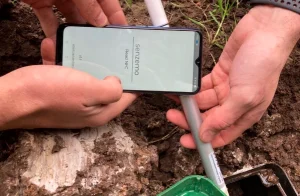
- SSM40 — soil moisture for irrigation optimization and root-zone insight
- SMC30-OUT — outdoor temperature, humidity, and pressure
- SLW10 — leaf wetness for disease-risk and crop-protection decisions
- SRM10 — rainfall measurement
- STP40 — targeted probe measurements for specific outdoor applications
Orchards and irrigation
In orchard settings, soil moisture monitoring helps identify over- and
under-irrigation risk, reduce unnecessary water and energy use, and improve
decision-making around active irrigation and frost-response routines.
Vineyards and disease prediction
Vineyards often need a combination of microclimate, soil moisture,
rainfall, and leaf-surface conditions to decide when to irrigate, when to
protect, and how to reduce overuse of chemical treatments. The strongest
pages in this category should explain how different sensor types work
together rather than describing each device in isolation.
Best-fit agricultural applications
- Vineyard microclimate monitoring
- Leaf wetness and disease-risk analysis
- Soil moisture-based irrigation optimization
- Orchard water management
- Greenhouses and research plots
- Golf courses, parks, and managed landscapes

Compost, Mulch, Grain & Bulk Temperature Monitoring
In composting and similar bulk-material processes, temperature is one of
the most important operational indicators. Manual checks take time, require
physical effort, and make continuous process visibility difficult. In compost
operations especially, temperature thresholds can influence quality, odors,
microbial activity, and the timing of pile turning.
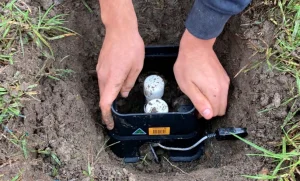
Senzemo addresses this with long-form probe sensors designed for
temperature measurement deep inside compost, mulch, grain, or other
monitored material. Instead of depending on repeated manual insertion of
hand probes, sites can move to a model where temperatures are tracked
continuously and teams are notified when action is needed.
Relevant products
- KOU20 — compost temperature sensor for waste-management and bulk-material use cases
- STP40 — targeted outdoor temperature probe for related industrial and field use cases
Strong-fit use cases
- Compost temperature monitoring
- Mulch monitoring
- Grain storage temperature monitoring
- Food storage silos
- Fire-prevention oriented temperature control in bulk materials
Why customers care
- Less manual labor spent taking readings
- Earlier notice when intervention is needed
- Better planning of turning and process steps
- Long-term cost advantages over labor-heavy checking routines

Product-to-Use-Case Map
SMC30 — Indoor Microclimate Sensor
For indoor temperature, humidity, and pressure monitoring in food
operations, museums, buildings, healthcare storage, and other indoor
environments where context matters in addition to temperature alone.
SMC30-OUT — Outdoor Microclimate Sensor
For urban climate, parks, agriculture, vineyard and orchard monitoring,
research projects, and outdoor environmental observation.
SPU10 — Indoor Air Quality Sensor
For offices, buildings, museums, schools, hospitals, municipal buildings,
and other indoor spaces where CO2, TVOC, and indoor comfort should be
tracked alongside temperature and humidity.
STO10 — Temperature Only Sensor
For efficient temperature logging in food safety, HACCP, cold chain,
storage units, refrigerators, and distributed compliance programs.
STB10 — Temperature Buffer Sensor
For food-simulant style monitoring where ambient air is not enough and
product-representative temperature improves HACCP decisions while
reducing false alarms.
STP40 — Temperature Probe Sensor
For freezers, industrial temperature points, tanks, field applications, and
installations where the sensor location and radio node location should be
separated.
STF40 — Food Probe Sensor
For cook-chill workflows, cooking verification, and food process
temperature measurements.
SSM40 — Soil Moisture Sensor
For irrigation optimization, orchards, vineyards, smart parks, green roofs,
greenhouses, and precision agriculture.
SLW10 — Leaf Wetness Sensor
For crop disease prevention, vineyards, orchards, crop fields, and
applications where leaf-surface moisture duration matters.
SRM10 — Rain Meter
For rainfall monitoring in agriculture, smart cities, environmental
monitoring, and operational weather observation.
KOU20 — Compost Temperature Sensor
For composting, mulch, grain, waste-management sites, and other
deep-probe temperature monitoring tasks.
How a typical deployment works
- Identify the environments, assets, and control points that matter most.
- Select the right sensor mix for those conditions and operational goals.
- Install sensors with LoRaWAN gateways sized for the site or network.
- Configure measurement intervals, thresholds, and alerts.
- Visualize data on a dashboard or integrate into your preferred platform.
- Use historical trends and alert history to improve operations over time.
This model works well because it does not treat monitoring as a one-time
installation. Instead, it creates a repeatable system for daily operations,
reporting, maintenance, quality control, and long-term optimization.
Why LoRaWAN is a strong fit
Many Senzemo use cases share the same operational requirement: they
need distributed sensors, low maintenance, and reliable data delivery
without making every endpoint dependent on local Wi-Fi or frequent power
intervention.
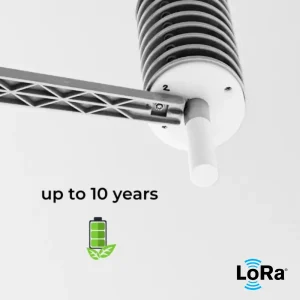
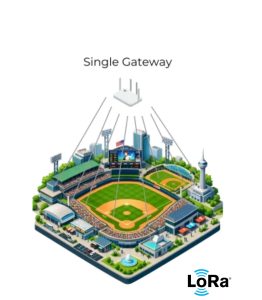
- Long-range communication with minimal infrastructure
- Low power consumption for multi-year battery life
- Good fit for dense sensor deployments and distributed assets
- Scalable architecture for pilots and multi-site rollouts
- Clean data flow into centralized dashboards and external platforms
That makes LoRaWAN well suited to food retail, hospitals, museums,
parks, agricultural sites, and smart-city deployments where the number of
sensing points can grow over time but the operational model still needs to
remain simple.
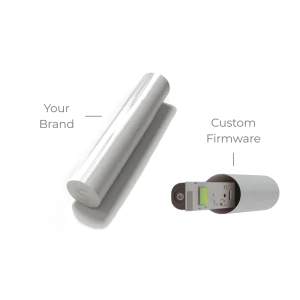
Need something beyond the standard portfolio?
Not every use case fits a catalog product exactly. Some deployments need
custom enclosure formats, specific probes, different mounting approaches,
unique firmware behavior, white-label hardware, or integrations into an
existing customer platform. Senzemo also works on custom IoT hardware
and firmware projects where the standard portfolio is a starting point rather
than the final answer.
This is especially relevant for OEM projects, large-scale standardization,
niche industrial requirements, and applications where the physical
environment imposes unusual constraints on measurement, installation, or
maintenance.
Frequently Asked Questions
Can these sensors be used with our existing platform?
Yes. Senzemo positions its products as compatible with LoRaWAN platforms,
while also offering its own analytics platform for visualization and access to data.
Do I need a different sensor for each monitoring problem?
Not always. Some projects work well with one sensor type, but many of the
strongest deployments combine multiple sensors so that each location is
monitored with the right level of precision and context.
Which product is best for HACCP and food compliance?
That depends on the workflow. STO10 is good for straightforward
temperature logging, STB10 is better when product-simulated temperature
matters, STP40 fits freezer and probe applications, and SMC30 adds
humidity context where needed.
Which sensors are best for vineyards and orchards?
The strongest combination usually includes soil moisture, outdoor
microclimate, rainfall, and sometimes leaf wetness, depending on irrigation,
disease pressure, and crop-protection goals.
Can Senzemo support pilot-to-rollout projects?
Yes. The public use cases and product positioning show a clear pilot-to-scale
approach, especially in multi-site food and distributed environmental monitoring.

Build the right monitoring stack for your use case
Whether you are digitalizing HACCP, improving cold-chain visibility,
protecting museum collections, monitoring hospital refrigeration, optimizing
irrigation, or tracking compost temperature, Senzemo can help you choose
the right mix of sensors and deployment architecture.
Start with a single problem, a pilot, or a larger rollout plan. We will help
you identify the right product mix, LoRaWAN architecture, and data model
for your environment.