
When you already have a clear use case, building IoT hardware from scratch is not always the fastest route to market. In many cases, the smarter move is to start from a proven device and customize it around your application, your brand, and your deployment needs. That is the model Senzemo presents today: helping solution providers, platform companies, system integrators, and industrial teams move from pilot to rollout with production-ready IoT hardware.
Senzemo’s current position is especially relevant for companies that want white-label options. Partners can start from its existing portfolio, white-label field-proven sensors, change measured parameters, tune firmware, adjust enclosure or industrial design, and discuss exclusivity depending on scope and volumes.
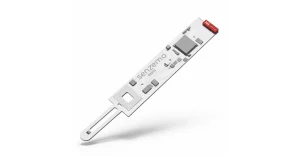
Step 1: Start from an existing, field-proven sensor
The first step is not redesigning everything. It is choosing the closest existing product as the base. Senzemo’s portfolio already includes indoor air quality, indoor and outdoor microclimate, soil moisture, temperature-only, temperature probe, temperature buffer, food probe, rain meter, leaf wetness, and compost temperature sensors. Starting from an existing device reduces development effort and lowers technical risk compared with a clean-sheet project.
For buyers, this matters because it shortens the path from requirement to deployment. Senzemo explicitly frames this approach as a faster way to move from validated prototype or pilot to production-ready hardware.

Step 2: Define what actually needs to be customized
Not every project needs a brand-new sensor. Sometimes the right answer is a focused list of changes: branding, firmware behavior, enclosure adjustments, preconfigured settings, or a different measurement setup. Many projects start faster by adapting a proven device through white-labeling, changed measured parameters, firmware tuning, enclosure adjustments, and exclusivity terms.
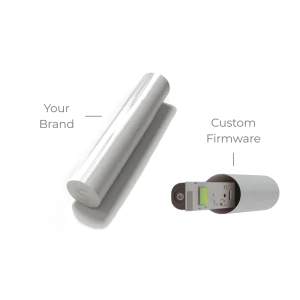
Step 3: Apply white-label branding
For many partners, the most visible customization is white-label branding. We offer white-label options and branding, along with industrial design adjustments. That creates room for a partner-branded product line without forcing a full hardware redesign from zero.
This step is especially valuable for solution providers and integrators that want hardware to match their own commercial offering. Instead of sending customers a generic third-party device, they can deliver a sensor that feels like part of their own platform and service package.
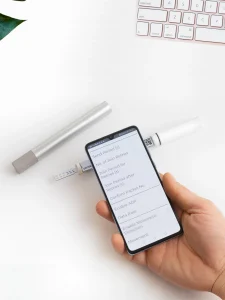
Step 4: Tune firmware and measurement behavior
Branding is only one layer. In many projects, the bigger value is inside the device. Senzemo customized firmware is part of our expertise. Firmware work as a process built around specification, development, testing, and power optimization. It also says it can adapt firmware and measurement behavior to partner requirements.
That matters when your deployment needs specific reporting intervals, thresholds, payload behavior, battery strategy, or configuration profiles. We validate connectivity, measurement behavior, configuration, NFC/downlink settings, and project-specific labeling before shipment.
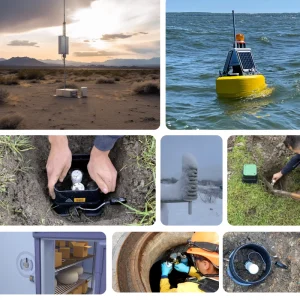
Step 5: Adjust the hardware for the real environment
Some projects also need physical adaptation. Senzemo can adjust enclosure and industrial design, and it emphasizes design for harsh environments, IP targets, material selection, and certification-ready documentation. It also notes an ATEX/IECEx path when required.
That is important because real-world deployments are rarely “lab clean.” A sensor may need to survive moisture, dust, vibration, mounting constraints, weak-signal locations, or installation conditions that affect wireless performance. Senzemo’s expertise is also enclosure-aware antenna tuning and rugged deployment design.
Step 6: Validate integration and quality before rollout
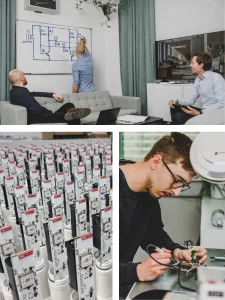
Customization only works if rollout is predictable. Senzemo supports integration with clear payload formats, configuration approaches, and documentation. It also positions pre-shipment testing as part of the product, checking connectivity, measurement behavior, configuration, and shipment readiness before devices leave the facility.
For a buyer, this reduces the usual scaling pain: misconfigured devices, installation delays, noisy data, and unnecessary support tickets. It also gives procurement and project teams more confidence when moving from a pilot batch to a broader deployment.


Step 7: Scale production and discuss exclusivity
Once the customized version is proven, the next question is scale. We support pilot runs in tens or hundreds of units and scales through pre-production into hundreds to thousands-plus, with manufacturing coordination and QA.
For some partners, this is also the point where exclusivity matters. Senzemo can agree territory, segment, or customer exclusivity depending on project scope and volumes. That is a useful option for companies building a differentiated market offer around Senzemo-based hardware.
Why this model works
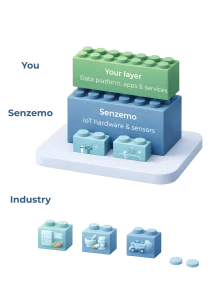
The biggest advantage of white-label customization is speed without starting blind. Not generic off-the-shelf hardware, but not a slow, fully custom build for every project either. Instead, the company positions itself as a hardware partner that helps teams start from proven products, make the right modifications, and reach production faster with less risk.
For companies that already know their use case, that can be the shortest path to a branded, deployment-ready IoT product.
FAQ
What white-label options does Senzemo offer?
We offer white-label and branding options, firmware tuning, adjusted measurement behavior, industrial design or enclosure changes, and possible exclusivity depending on scope and volumes.
Can Senzemo start from an existing sensor instead of building from scratch?
Many projects begin by adapting a proven device from its existing portfolio to reduce risk and accelerate time to market.
Can Senzemo customize firmware?
Yes. Customized firmware is our core capability and describes a process based on specification, development, testing, and power optimization.
Does Senzemo support validation before shipment?
Every unit goes through repeatable checks for LoRaWAN connectivity, measurement behavior, configuration, labeling, and shipment readiness.
Can Senzemo support larger volumes?
We support the full path from pilot runs to scaled production in the hundreds and thousands-plus.

Looking for a white-label IoT sensor that fits your use case, your brand, and your rollout plan?
Talk to our team about starting from an existing product and customizing it for your market.