
_______
Sport venues don’t manage one field. They manage many zones with different conditions each hour (sun, traffic, wind, drainage).Senzemo helps ground managers turn those invisible differences into clear, actionable decisions by continuously monitoring soil moisture and temperature-driven stress conditions across the venue using LoRaWAN. We apply our sensor technology to stadiums, training facilities, and indoor arenas.
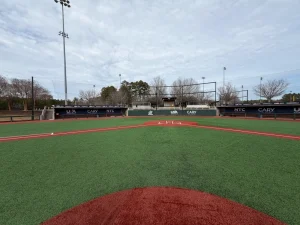
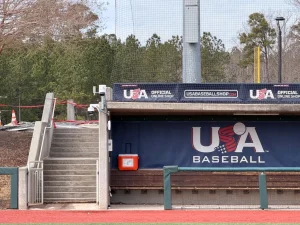
The most recent case of sport ground monitoring is deployed at baseball grounds in the USA.
Real-time conditions lead to decisions
On training days, tournaments, and youth programs, heat and humidity can rise fast. Ground and venue teams need a simple answer to:
- Is it safe to train/play right now?
- Which areas are overheating first?
- Do we need to adjust training times, recovery breaks, or even close the surface?
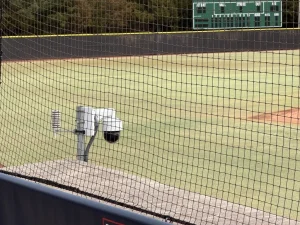
Ground and venue teams need to know whether it is safe to train/play right now.
Without live monitoring, decisions rely on general weather apps or a single point measurement, neither reflects what’s happening on the field surface and within the venue microclimate. That’s why leading venues adopt automated monitoring: continuous tracking, real-time alerts, and consistent reporting help teams act earlier, reduce turf damage, and spend less time on repetitive inspections.
In real deployments, even nearby areas behave differently: one side dries faster (sun + wind), another holds moisture (shade + drainage), and high-wear zones show stress first. With manual checks and fixed irrigation schedules, teams miss these differences—overwatering some zones, underwatering others, creating inconsistent play quality, and increasing disease and recovery work.
As a result, irrigation and maintenance become reactive. By the time issues are visible, you’re already behind: dry patches turn into damage, wet zones become soft or disease-prone, and repairs cost more and disrupt schedules.
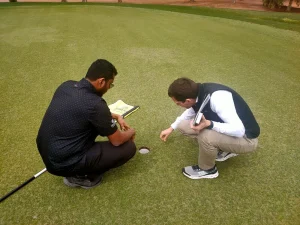
In real deployments, even nearby areas behave differently: one side dries faster (sun + wind), another holds moisture (shade + drainage), and high-wear zones show stress first.
How it works
Our system integrator partners install a Senzemo distributed LoRaWAN sensor network across outdoor fields, golf greens, training grounds, and indoor arenas. The deployment typically combines:
A) Microclimate monitoring (for heat/stress and operational safety)
Sensors installed around the venue (and in key exposure areas) track real conditions where athletes and turf are affected—helping teams act before conditions become unsafe.
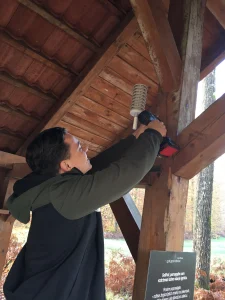
You’ll recognize this from our deployments mounted on structures around sports facilities (and even exposed to harsh weather like snow) to keep a continuous record in all seasons.
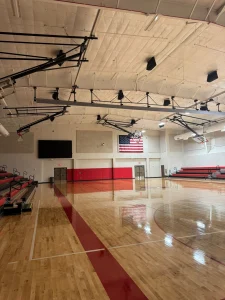
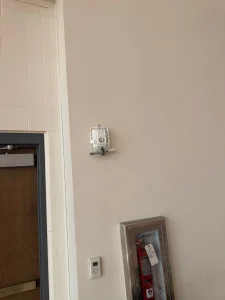
There is also indoor microclimate condition monitoring at gymnasiums in USA, for instance.
B) Soil monitoring (for irrigation decisions and turf consistency)
In rootzone “representative zones” we install soil sensors to track moisture where turf health is decided. In practice, that means placing probes in:
- sunny/open zones
- shaded/stadium-edge zones
- high-wear areas (e.g., goal mouths / center corridors)
- known drainage or dry-spot areas
Our deployments often use protective in-ground housings and clean installation workflows that make sensors easy to service while staying out of play.
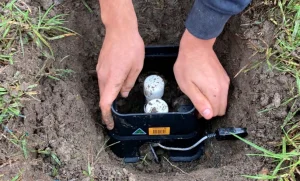
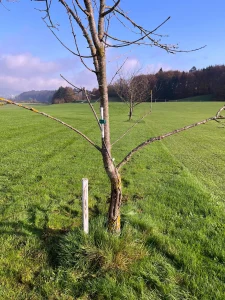
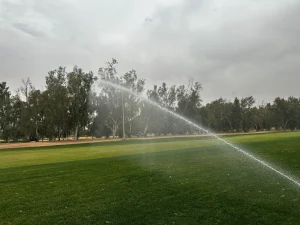
Soil moisture monitoring is essential for properly managed ground irrigation. It is especially useful in the case of golf courses, football stadiums, where large differences occur due to different environmental conditions.
C) Fast commissioning & maintenance-friendly operations
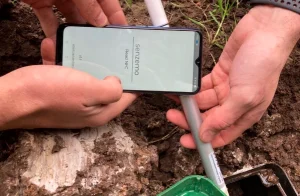
On-site teams can commission sensors efficiently (e.g., using NFC workflows where applicable) and validate placement quickly—important when you’re deploying across many points in a short maintenance window.
D) One view for grounds + venue ops
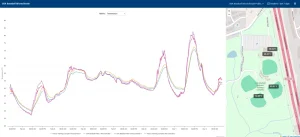
All measurements flow through LoRaWAN into dashboards that show:
- live values
- trends over time
- comparisons between zones
- alerts when thresholds are crossed
(Like the multi-line trend views you’ve captured in your deployments; where separate microclimate locations track differently and reveal spikes that a single measurement would hide.)
How to correctly deploy
A typical arena deployment starts long before any sensor goes into the ground. The firs scope begins with a short walkthrough together with the ground manager to understand how the site really behaves day to day. That means looking at sun and shade boundaries, where irrigation zones overlap (and where they don’t), which areas take the most wear, and how water moves after rain. In some venues we also factor in transitions between indoor and outdoor spaces, because conditions can shift quickly between covered areas, tunnel zones, and open field exposure.
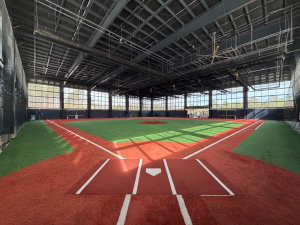
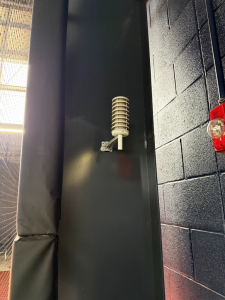
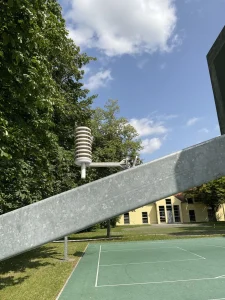
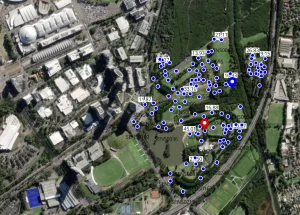
From there, we place sensors where they’ll reflect those differences in a meaningful way. Microclimate sensors are mounted at practical points around the facility (along stadium edges, near training areas, or on nearby structures) so teams can see how temperature and humidity evolve across the venue instead of relying on a single “average” reading. Soil sensors then go into selected turf zones at an appropriate rootzone depth, typically covering a mix of high-stress and high-impact areas (sunny sections, shaded edges, known dry spots, and heavier-traffic zones). On larger sites, this scales naturally into many measurement points, effectively turning the venue into a live “conditions map” rather than a handful of isolated checks.
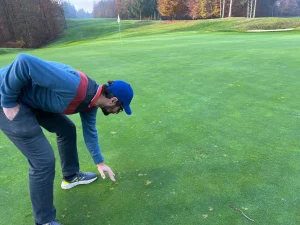
Once data is flowing, we align alerts and thresholds with how ground teams already make decisions. Instead of generic monitoring, the system is configured around practical triggers: warnings when heat stress risk rises for athletes and staff, alerts when a zone starts drying faster than expected, and notifications when rain or irrigation pushes moisture beyond a safe range. Over time, this becomes a very usable layer of decision support, guiding irrigation per zone (water where it’s needed, not everywhere) and helping teams spot issues early, before turf stress becomes visible damage. This approach also translates well across the different environments Senzemo supports. The same LoRaWAN-based monitoring method works for outdoor pitches, stadiums, and training complexes, and it’s equally valuable for golf courses where micro-zones can be even more pronounced. In indoor facilities, tracking temperature and humidity adds another layer, supporting comfort and safety monitoring in spaces where conditions can change with occupancy, ventilation, and event schedules.
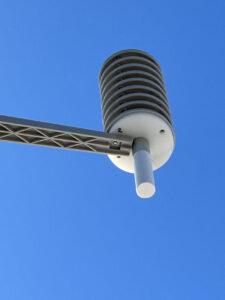
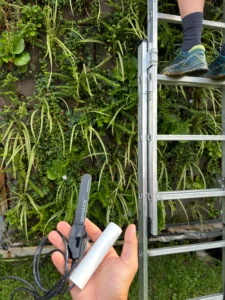
Senzemo sport ground monitoring usually consist of SMC30 and SSM40.
Measured parameters:
- Temperature
- Humidity
- Soil Moisture
Sensors deployed:
- SSM40 — Soil Moisture
- SMC30 — Temperature & Humidity & Air pressure
Why LoRaWAN is perfect
LoRaWAN is a strong fit for sports venues because it matches how these sites are built and operated: you often need reliable coverage across large, open areas (sometimes with buildings, stands, and mixed indoor/outdoor zones), but you can’t afford disruptive cabling projects or constant maintenance. With LoRaWAN, sensors can transmit over long distances while using very little power, so they can run continuously and still remain practical to maintain. Sports sites need:
- long-range coverage across large grounds
- minimal disruption during installation
- low-power sensors that can operate continuously
- scalable deployments from “a few zones” to “a full complex map”
LoRaWAN supports exactly that, making it practical to deploy many sensors where they matter most, without heavy infrastructure overhead.
That low-power, long-range combination also makes it easy to scale (starting with a handful of critical zones and expanding into a full “conditions map” across an entire complex) without having to add heavy networking infrastructure every time you add more measurement points.
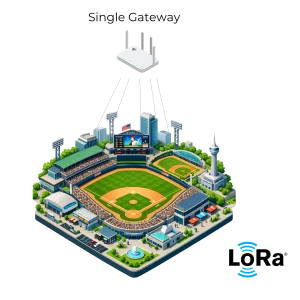
LoRa is perfect for sport ground monitoring as it is easily scalable.

Long life, reliable monitoring, easy deployments are what makes LoRaWAN sensors perfect for these types of usecases.
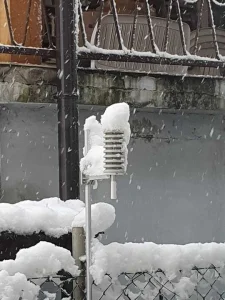
Senzemo sensors work in harsh environments.
Reliability built on decades of IoT experience
Built on decades of IoT experience, Senzemo delivers reliable sports ground environmental monitoring—durable sensors, stable connectivity, and data you can trust. Our founder, Luka Mali, previously worked on Scoutee, bringing hands-on sports technology experience into the product.
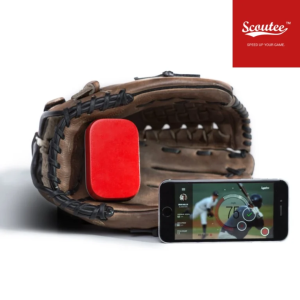
Our founder, Luka Mali, previously worked on Scoutee, bringing hands-on sports technology experience into the product.


