

If you are deploying LoRaWAN sensors in cold rooms, compost sites, smart cities, or agriculture, reliability is not a nice-to-have. It is the baseline. A sensor that ships “mostly working” is a sensor that creates support tickets, site visits, lost data, and mistrust.
At Senzemo, we treat pre shipment testing as part of the product, not a final checkbox. Every single unit goes through a repeatable in house process to confirm connectivity, configuration, and measurement behavior before it leaves our facility. Our sensors are designed for long lifetime, harsh environments, and low maintenance operation, so quality control must match that promise.
Below is a transparent look at what we test, how we test it, and what you can request if you need additional documentation.
Why pre shipment testing is essential for LoRaWAN sensors
LoRaWAN devices often get installed in places where access is difficult and expensive: rooftops, cold storage rooms, compost piles, underground soil, industrial buildings, and outdoor poles.
If a device is misconfigured, has weak RF performance, or reports abnormal measurements, you do not just lose data, you lose time and money.
Pre shipment testing reduces:
- DOA units and early failures
- installation delays and repeat site visits
- false alarms and noisy data
- network troubleshooting that is actually device configuration
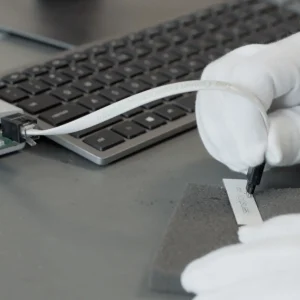
Our pre shipment test flow (high level)
Every sensor goes through a sequence that checks three main pillars:
- LoRaWAN connectivity and parameters
- measurement behavior and sensor readings
- configuration, labeling, and shipment readiness
This applies across our portfolio, including microclimate, temperature, probe sensors, soil moisture, and rain metering devices.

Portfolio in PDF
Network testing on an LNS (LoRaWAN Network Server)
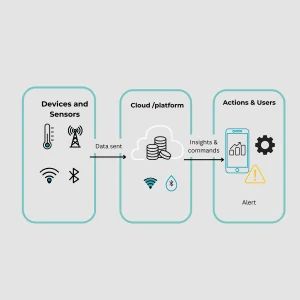
Before shipment, we connect devices to an LNS to validate the full LoRaWAN path end to end. This is where we confirm that the sensor is not only “powering on”, but actually behaving like a proper LoRaWAN device in a real network.
What we verify on the LNS:
- join behavior and session stability
- uplink consistency (messages arrive as expected)
- region compatibility and frequency plan correctness (EU, US, AS, AU, etc. depending on the device configuration)
- key LoRa parameters such as data rate behavior and signal metrics (RSSI, SNR) for sanity checks
- payload decoding to confirm the data format matches the expected structure
This step is critical because a sensor can look “fine” on the bench, yet fail in a network because of region settings, join parameters, or an incorrect configuration profile.
Many of our sensors support configuration via NFC and downlink, and we validate that the intended configuration method is working correctly.
Measurement testing (does the sensor report the right thing)
Connectivity is only half the story. A sensor that transmits perfect packets but reports incorrect values is still a failure.
During measurement tests we validate that readings are:
- present and updating
- within expected ranges
- stable and consistent relative to the test conditions
Examples across the portfolio:
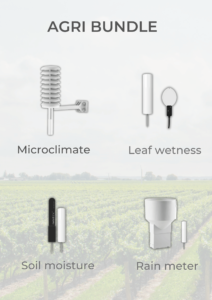
- Microclimate sensors: temperature, humidity, and air pressure behavior checks, plus movement detection sanity checks where applicable.
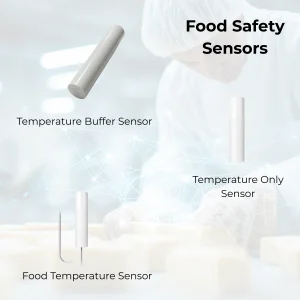
- Temperature sensors and probes: probe response and plausible readings for the given environment and sensor type.
- Soil moisture sensors: basic functional checks and plausibility validation for volumetric water content readings.
- Rain meter: functional validation and pulse based reporting behavior checks.
The goal is not to simulate every possible field condition. The goal is to ensure the sensor behaves correctly and consistently before it ever reaches your site.
Food safety sensors
Agri sensors

SMC30 – Indoor
Configuration validation (NFC, downlinks, and default profiles)
Many projects require specific settings: reporting intervals, alarms, acknowledgments, and other behaviors.
We validate:
- the sensor accepts configuration (NFC and or downlink depending on model)
- the applied configuration matches the order requirements
- the device reboots and continues reporting with the new settings
- any project specific labeling or identification requirements are correct
This prevents the most common deployment problem: “the sensor works, but it is not configured the way we expected.”
Optional: In house certificate for your shipment
Some customers want documentation that each unit has been tested and verified before delivery. We can provide an in house test certificate if needed, suitable to be included next to the device or shipment documentation.
Typical certificate content can include:
- device model and serial or identifier
- date of test
- LNS connectivity verification
- basic measurement verification
- tester signature or internal reference
If you need a specific format (for example for your internal QA process or customer delivery packs), we can align to that.
What this means for you as a customer
A good pre shipment test process means:
- faster installs
- fewer surprises in the field
- predictable data quality from day one
- smoother scaling from pilot to full deployment
Whether you are rolling out cold chain monitoring, compost temperature monitoring, smart city microclimate networks, or irrigation optimization, consistent device level QC is the difference between a smooth rollout and a support heavy project.